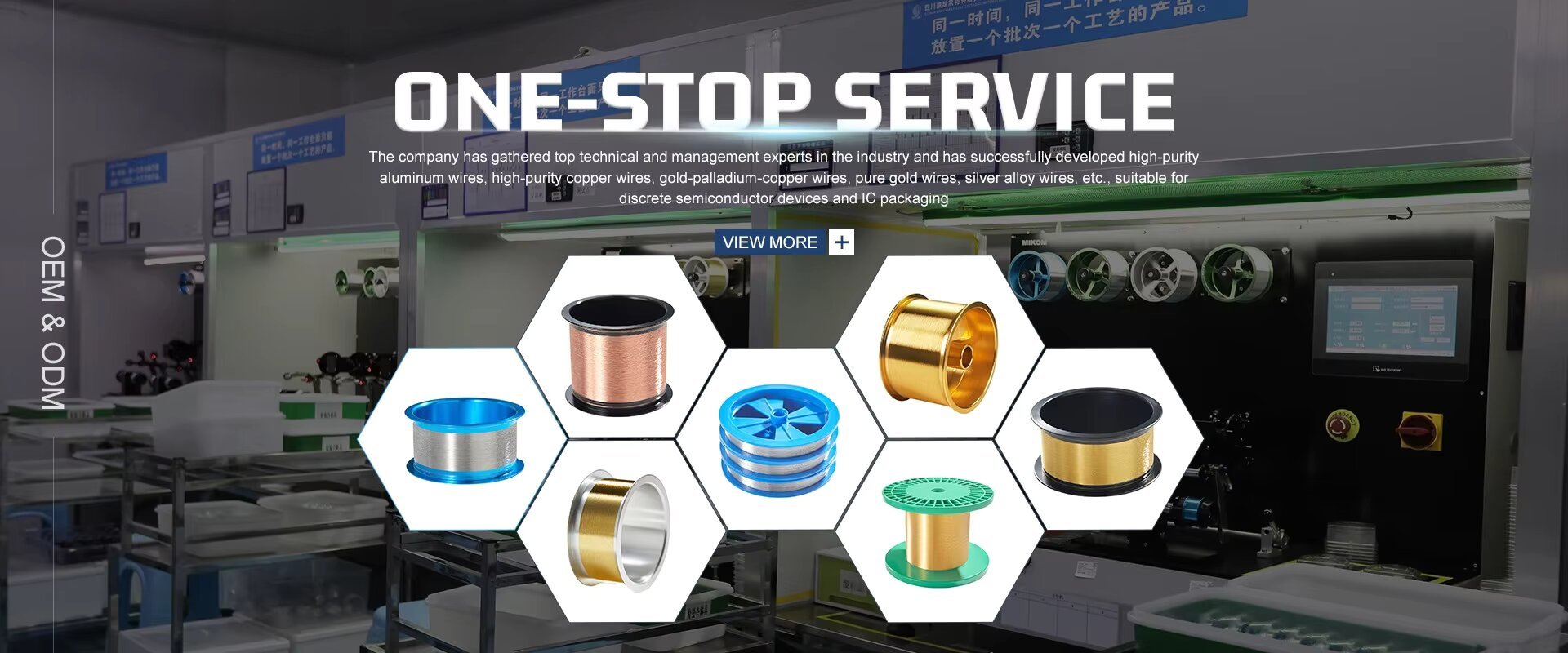
Gold-Plated Tungsten Wire for Medical Device Research and Development | Sichuan Winner
Ultra-Fine Gold-Coated Tungsten Wire for Medical Microelectrodes, Biosensors, Precision Components, and R&D Applications
Manufacturer: Sichuan Winner
Product: Gold-Plated Tungsten Wire (Au/W)
Keywords: Medical Device R&D, Ultra-Fine Tungsten Wire, Gold-Coated Tungsten Wire, Precision Medical Materials
1. Introduction: Precision Metal Wires for Medical Technology Innovation
As medical devices become smaller, more sophisticated, and increasingly dependent on precise electrical and mechanical performance, the demand for ultra-fine metallic materials continues to grow.
From miniature sensors and diagnostic instruments to experimental microelectrodes and precision electronic components, medical device researchers require materials that offer dimensional accuracy, reliable electrical characteristics, and suitable mechanical properties.
Sichuan Winner Gold-Plated Tungsten Wire combines a tungsten (W) core with a gold (Au) surface coating, offering a specialized material option for medical device research, prototype development, and precision engineering.
By combining the high stiffness and thermal stability of tungsten with the electrical conductivity and chemical stability of gold, this composite wire may support the development of miniature components where conventional metallic wires do not meet specific design requirements.
Gold-plated tungsten wire should be evaluated according to the intended application. It is not automatically suitable for implantation, direct patient contact, or other regulated medical uses.
2. What Is Gold-Plated Tungsten Wire?
Gold-plated tungsten wire is a composite metallic wire consisting of a tungsten core surrounded by a thin gold coating.
The tungsten core provides structural rigidity, high melting-point characteristics, and dimensional stability, while the gold coating creates a conductive surface that can improve electrical contact behavior under suitable operating conditions.
Material Structure
Core Material: Tungsten (W)
Surface Coating: Gold (Au)
Material Configuration: Au/W composite wire
Wire Diameter: Ultra-fine and customized diameters
Coating Thickness: Subject to technical requirements and manufacturing confirmation
Supply Format: Spools or other packaging configurations, subject to availability
The finished wire diameter includes the core and coating layers.
For example, a 30 μm finished wire with a 0.3 μm radial gold coating and no intermediate layer would theoretically have a tungsten core diameter of approximately 29.4 μm.
Actual dimensions must be confirmed through inspection.
3. Key Material Advantages for Medical Device R&D
3.1 Ultra-Fine Diameter for Miniaturized Components
Miniaturization is an important trend in medical electronics, diagnostic equipment, and precision instrumentation.
Ultra-fine gold-plated tungsten wire can be investigated for components requiring small dimensions and controlled geometries.
Potential development diameters include:
Wire Diameter
Equivalent Diameter
Potential Research Focus
10 μm
0.01 mm
Experimental microelectrodes and miniature structures
15 μm
0.015 mm
Precision sensor prototypes
20 μm
0.02 mm
Microelectronic and electrode research
30 μm
0.03 mm
Precision electrical components
50 μm
0.05 mm
Miniature contacts and instrument components
80 μm
0.08 mm
Specialized mechanical and electrical structures
These diameters are illustrative development options, not confirmed medical-grade product specifications or guaranteed manufacturing capabilities.
3.2 High Mechanical Stiffness of Tungsten
Tungsten has a relatively high elastic modulus, making it useful for investigating miniature structures that require rigidity and resistance to deformation.
Potential advantages include:
High stiffness for certain precision structures
Good dimensional stability under appropriate loading
High melting point
Suitability for selected microfabrication and precision assembly processes
However, tungsten's stiffness also creates design limitations. Very fine tungsten wires may fracture under excessive bending, tight winding, or repeated mechanical loading.
Mechanical testing is essential before using the material in flexible or fatigue-sensitive components.
3.3 Conductive Gold Surface
Gold offers high electrical conductivity and strong resistance to oxidation under many operating conditions.
A continuous gold coating may help provide:
A conductive outer surface
Improved electrical contact characteristics
Reduced surface oxidation compared with exposed tungsten
A surface suitable for selected electrode and sensor research
Electrical performance depends on coating thickness, uniformity, surface cleanliness, contact conditions, and environmental exposure.
3.4 Potential for Precision Customization
Medical device research often involves specialized dimensions, experimental geometries, and application-specific material requirements.
Sichuan Winner welcomes technical inquiries concerning:
Wire diameter
Gold coating thickness
Core material specifications
Wire length
Spool dimensions
Packaging requirements
Prototype and research quantities
All customization options are subject to technical feasibility and production confirmation.
4. Potential Medical Device Research Applications
4.1 Medical Microelectrode Research
Application Area: Medical Microelectrodes and Electrophysiology Research
Microelectrodes are used in research involving electrical signal detection, stimulation, and characterization of biological or electronic systems.
Ultra-fine gold-plated tungsten wire may be evaluated as a candidate material for certain experimental electrode structures.
Potential research areas include:
Laboratory electrophysiology electrodes
Miniature electrical sensing structures
Experimental stimulation electrodes
Precision electrode prototypes
Specialized biomedical instrumentation
The gold surface may offer useful electrical properties, while the tungsten core can provide mechanical rigidity.
However, electrode impedance, electrochemical behavior, corrosion resistance, coating integrity, and biological safety must be verified.
For electrodes intended for tissue contact or implantation, additional device-specific safety and regulatory evaluation is essential.
4.2 Biosensors and In Vitro Diagnostic Equipment
Application Area: Biosensors and In Vitro Diagnostics (IVD)
Biosensors and diagnostic instruments increasingly rely on miniature conductive structures and precisely controlled sensing surfaces.
Gold-plated tungsten wire may be investigated for selected sensor architectures where a small conductive element and a mechanically rigid core are desirable.
Potential development areas include:
Experimental electrochemical sensors
Laboratory diagnostic instruments
Miniature conductive probes
Research-stage biosensing platforms
Precision electrical interfaces
Gold surfaces can support certain electrochemical and surface-functionalization approaches, but the suitability of gold-plated tungsten depends on the specific sensing chemistry and device design.
Performance should be evaluated through application-specific testing rather than assumed from the presence of gold plating alone.
4.3 Precision Electrical Components in Medical Instruments
Application Area: Medical Electronics and Diagnostic Instrumentation
Medical diagnostic systems often incorporate miniature electrical contacts, precision sensors, and compact electronic assemblies.
Gold-plated tungsten wire may be considered for research involving:
Miniature electrical contacts
Precision conductive structures
Specialized internal connections
Instrument calibration components
Microelectronic test assemblies
For applications located entirely inside medical equipment without direct patient contact, material evaluation may focus primarily on electrical reliability, mechanical stability, manufacturing compatibility, and environmental resistance.
Such applications can provide a practical starting point for material development.
4.4 Medical Micro-Coils and Miniature Structures
Application Area: Miniature Coil and Precision Component Research
Micro-coils and small wire-based structures are used in various electronic and precision engineering applications.
Gold-plated tungsten wire may be studied for specialized miniature structures where high stiffness is beneficial.
However, tungsten is not inherently an ideal material for tightly wound or repeatedly flexed springs.
Before considering it for micro-coil applications, researchers should evaluate:
Minimum achievable winding radius
Wire fracture behavior
Gold coating cracking
Mechanical fatigue
Dimensional repeatability
Electrical continuity after forming
Alternative materials may be more appropriate when high flexibility or long fatigue life is required.
4.5 Research Probes and Laboratory Testing Equipment
Application Area: Precision Research and Testing Instruments
Ultra-fine metallic wires are important in specialized laboratory equipment and microelectronic testing systems.
Gold-plated tungsten wire may be investigated for:
Precision test probes
Miniature electrical measurement structures
Experimental contact elements
Medical device development fixtures
Specialized research instrumentation
The material's potential value depends on the required contact force, probe geometry, electrical resistance, wear behavior, and mechanical durability.
5. Gold-Plated Tungsten Wire vs. Other Medical Research Wires
Selecting the appropriate metallic wire requires consideration of the intended mechanical and electrical function.
Material
General Characteristics
Potential Research Considerations
Gold-Plated Tungsten Wire
High-stiffness tungsten core with conductive gold surface
Rigid microelectrodes, precision contacts, miniature structures
Gold-Plated Molybdenum Wire
Molybdenum core with gold surface
Selected precision conductive components and sensor research
Gold Wire
Highly conductive, ductile noble metal
Specialized electrical connections and electrode research
Platinum-Iridium Wire
Noble-metal alloy with established use in selected medical electrodes
Electrodes and certain implantable-device applications
Stainless Steel Wire
Mechanical strength and broad industrial availability
Precision structures and selected medical components
Nitinol Wire
Shape-memory and superelastic properties
Flexible structures and selected medical-device applications
No single material is optimal for every medical application.
For example, platinum-iridium or other established electrode materials may be more appropriate for certain long-term implantable devices, while gold-plated tungsten may be useful for investigating rigid, miniature electrical structures.
Material selection should always be based on verified performance and regulatory requirements.
6. Critical Technical Requirements for Medical Device Development
For medical device manufacturers and research laboratories, wire diameter alone is not sufficient to determine suitability.
The following characteristics should be evaluated.
Dimensional Accuracy
Finished wire diameter
Diameter tolerance
Surface consistency
Roundness and dimensional uniformity
Gold Coating Quality
Coating thickness
Thickness uniformity
Coating continuity
Adhesion to the substrate
Surface defects and porosity
Mechanical Performance
Tensile strength
Elongation at break
Bending performance
Fracture resistance
Fatigue behavior where applicable
Electrical Performance
Electrical resistance
Contact resistance
Electrode impedance where relevant
Electrical stability after mechanical forming
Chemical and Environmental Performance
Corrosion resistance
Coating degradation
Metal release
Cleaning and sterilization compatibility, if required
Documentation and Traceability
Depending on the application, customers may require material certificates, dimensional inspection reports, coating inspection results, batch traceability, and additional qualification documentation.
The availability of specific test reports and certifications should be confirmed before ordering.
7. Important Considerations for Medical-Grade Applications
Gold plating alone does not establish that a wire is biocompatible or suitable for use in a medical device.
For patient-contacting applications, manufacturers must evaluate the final device based on its intended use, contact type, contact duration, manufacturing process, and applicable regulatory requirements.
Depending on the application, relevant considerations may include:
ISO 10993 biological evaluation
Corrosion and metal ion release testing
Particulate generation
Coating integrity after forming
Cleaning and sterilization effects
Long-term stability
Applicable FDA, EU MDR, or other regulatory requirements
A material intended for laboratory research must not be represented as approved for implantation or clinical use without the necessary evidence and authorization.
Sichuan Winner gold-plated tungsten wire should be considered a precision material for evaluation and development unless a specific medical application has been independently qualified.
8. Why Consider Sichuan Winner?
Precision Material Development
Sichuan Winner focuses on precision metallic wire solutions and welcomes inquiries involving ultra-fine gold-plated tungsten wire and other specialized metal materials.
For research teams working on miniature components, selecting the correct wire diameter and coating structure can be an important part of prototype development.
Application-Oriented Customization
Different medical device research projects may require different wire geometries, surface properties, and packaging configurations.
Sichuan Winner can discuss customer-specific technical requirements and assess the feasibility of customized solutions.
Support for Prototype Evaluation
Research laboratories and product development teams often require material samples before proceeding to larger-scale qualification.
Customers are encouraged to provide their target specifications, intended application, and required inspection criteria when requesting samples or quotations.
Technical Communication
Clear technical communication is essential for successful material development.
Sichuan Winner welcomes discussions with engineers, researchers, medical device developers, and precision component manufacturers to identify suitable material options for further testing.
9. How to Select Gold-Plated Tungsten Wire for Your Project
Before requesting a quotation, medical device developers should define the following:
Application: Microelectrode, biosensor, precision contact, or other component.
Finished Diameter: For example, 10 μm, 20 μm, 30 μm, or another specified size.
Gold Coating Thickness: Required radial thickness and allowable tolerance.
Mechanical Requirements: Stiffness, tensile strength, bend radius, and fatigue performance.
Electrical Requirements: Resistance, impedance, and contact characteristics.
Operating Environment: Temperature, humidity, chemical exposure, and sterilization conditions.
Regulatory Requirements: Whether the component will contact patients, biological samples, or remain inside non-contact equipment.
Order Requirements: Sample quantity, spool length, packaging, and delivery schedule.
Providing these details helps the supplier assess material suitability and manufacturing feasibility.
10. Conclusion: Supporting Innovation in Medical Device R&D
Ultra-fine gold-plated tungsten wire offers an interesting combination of mechanical rigidity, dimensional precision, and a conductive gold surface.
These characteristics make it a candidate for research involving medical microelectrodes, biosensors, miniature electrical contacts, precision instruments, and specialized microelectronic structures.
However, successful medical applications depend on much more than material composition. Coating quality, electrical performance, mechanical durability, chemical stability, and device-specific safety must all be evaluated.
Sichuan Winner is committed to exploring precision metal wire solutions for demanding research and engineering applications.
Whether your project involves ultra-fine wire development, specialized gold coating requirements, or miniature component research, our team welcomes your technical inquiries.
Contact Sichuan Winner
Product: Ultra-Fine Gold-Plated Tungsten Wire
Material: Gold-Coated Tungsten (Au/W)
Applications: Medical Device R&D, Microelectrodes, Biosensors, Precision Electronics, Research Instrumentation
Contact Sichuan Winner to discuss custom wire specifications, research samples, and quotation requirements.
Disclaimer: The applications described in this article are potential research and development uses. Product availability, specifications, and performance require supplier confirmation. No medical certification, regulatory approval, implantability, or clinical suitability is implied.
SEO Information
SEO Title: Gold-Plated Tungsten Wire for Medical Device R&D | Sichuan Winner
Meta Description: Explore ultra-fine gold-plated tungsten wire for medical device research, microelectrodes, biosensors, precision components, and customized Au/W wire solutions from Sichuan Winner.
SEO Keywords:
Gold-Plated Tungsten Wire, Medical Gold-Plated Tungsten Wire, Ultra-Fine Tungsten Wire, Gold-Coated Tungsten Wire, Medical Microelectrode Wire, Tungsten Wire for Medical Device Research, Gold-Plated Tungsten Wire Manufacturer, Medical Sensor Wire, Precision Metal Wire, Au/W Wire, Sichuan Winner
Suggested URL Slug:
gold-plated-tungsten-wire-medical-device-rd
Suggested Image ALT Text:
Ultra-fine gold-plated tungsten wire for medical device research and precision microelectrode development – Sichuan Winner.

 يجب أن تكون رسالتك بين 20-3000 حرف!